
The Future of Passwordless Authentication: How MSSPs Implement Advanced Identity Verification
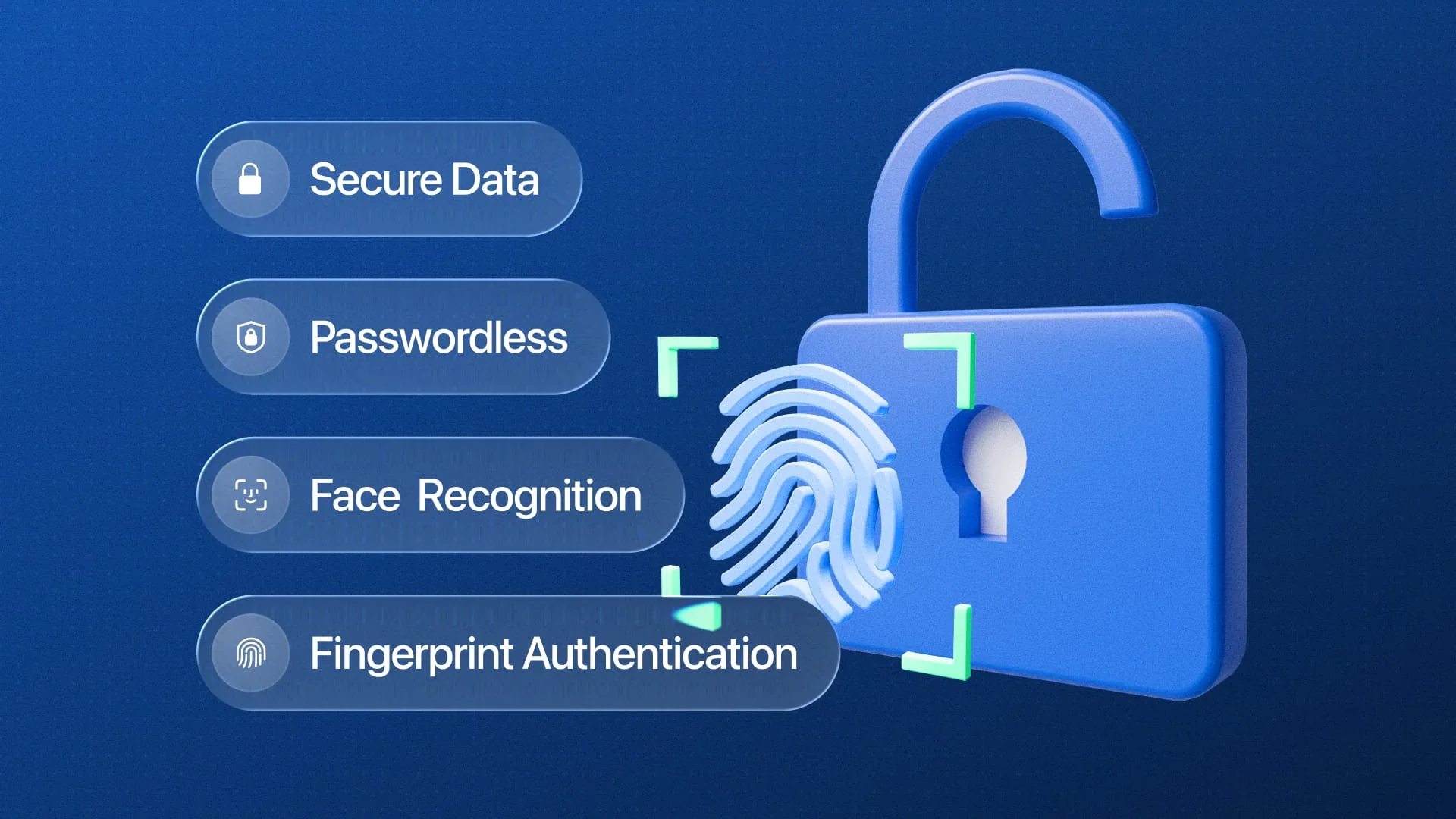
The password has been the dominant form of digital authentication for more than six decades. It has also been the source of more security failures than any other single control in the history of information technology. Stolen passwords, reused passwords, weak passwords, and phished passwords account for the majority of credential-based breaches, a category that represents the most common initial access vector in cyberattacks worldwide. The security industry has known about this problem for decades. The shift away from passwords is finally underway.
Passwordless authentication, the use of cryptographic keys, biometrics, hardware tokens, and device-based verification to confirm identity without a shared secret, is moving from a niche innovation to an enterprise standard. Major technology platforms, identity providers, and regulatory frameworks are actively accelerating this transition. For businesses navigating the shift, a Managed Security Services Provider (MSSP) provides the technical expertise, implementation support, and ongoing management that makes passwordless authentication a practical reality rather than an aspirational goal.
Why Passwords Have Failed
The fundamental problem with passwords is that they are a shared secret, a piece of information known to both the user and the authenticating system. Shared secrets can be stolen, guessed, phished, intercepted in transit, extracted from breached databases, and reused across systems. No amount of password policy complexity, minimum length requirements, mandatory special characters, forced rotation schedules, has meaningfully reduced the incidence of credential compromise. In many cases, complexity requirements have made the problem worse by pushing users toward predictable substitution patterns and password reuse across personal and professional accounts.
The scale of the problem is significant. Billions of credential pairs from past data breaches circulate on dark web markets and criminal forums, available for purchase and use in credential stuffing attacks against any organization whose employees reused exposed passwords. Multi-factor authentication has provided meaningful protection against credential stuffing, but it has not eliminated the underlying vulnerability. A phished MFA code, a SIM swap attack, or an adversary-in-the-middle proxy can defeat many common MFA implementations.
CyberSecOp's Dark Web Monitoring service provides ongoing visibility into whether your organization's credentials have been exposed in third-party breaches, but monitoring for exposure is a reactive control. Passwordless authentication eliminates the credential itself as an attack surface.
How Passwordless Authentication Works
Passwordless authentication replaces the shared secret model with public-key cryptography. Rather than storing a password on a server that could be breached, a passwordless system stores a public key that is mathematically useless without the corresponding private key, which never leaves the user's device. Authentication occurs through a cryptographic challenge-response exchange that proves possession of the private key without transmitting it.
The user experience of this process typically involves a biometric, a fingerprint scan or facial recognition, or a hardware token that unlocks the private key and completes the authentication. From the user's perspective, logging in requires a touch of a finger or a glance at a camera rather than typing and remembering a complex string of characters.
The security properties of this model are substantially stronger than password-based authentication. There is no credential to steal from a server database. There is no secret to phish, a cryptographic challenge can only be answered by the device that holds the private key. There is no credential to reuse across systems. And the biometric or PIN that unlocks the private key is verified locally on the device rather than transmitted to a server.
The FIDO2 Standard and Passkeys
The technical foundation for most modern passwordless implementations is the FIDO2 standard, developed by the FIDO Alliance in collaboration with major technology companies. FIDO2 encompasses the WebAuthn protocol, which enables browsers and applications to use device-based cryptographic authentication, and the CTAP protocol, which defines how external hardware authenticators communicate with devices.
Passkeys, the consumer-facing implementation of FIDO2 credentials, are now supported natively by Apple, Google, and Microsoft platforms, and are accepted by a growing number of enterprise applications, identity providers, and consumer services. A passkey is a FIDO2 credential that can be synchronized across a user's devices through their platform account, providing the security properties of hardware-bound authentication with the convenience of availability across multiple devices.
For enterprises, FIDO2 hardware security keys provide the highest level of assurance, binding authentication to a physical device that must be present for login to succeed. These keys are phishing-resistant by design: the cryptographic challenge includes the domain of the site being authenticated to, making it impossible for a phishing site to capture and replay a valid authentication response.
Biometric Authentication: Capability and Considerations
Device-Bound Biometrics
The biometric verification used in most passwordless implementations, the Face ID scan, the Touch ID fingerprint, the Windows Hello facial recognition, occurs entirely on the device. The biometric template is stored in a secure enclave that cannot be accessed by the operating system or any application, and the biometric data itself never leaves the device. Authentication servers receive only a cryptographic proof that the biometric check succeeded, not the biometric data itself.
This architecture addresses the privacy and security concerns that have historically surrounded biometric authentication. A compromised server cannot expose biometric data it never received. A stolen biometric cannot be used on a different device whose secure enclave contains a different template.
Behavioral Biometrics
Beyond physical biometrics, behavioral biometrics analyze patterns in how users interact with their devices, typing rhythm, mouse movement patterns, touch pressure and gesture characteristics, and navigation behavior, to continuously verify identity throughout a session rather than only at the point of login. Behavioral biometrics can detect when a session that authenticated as a legitimate user is subsequently being operated by someone else, whether due to account takeover, session hijacking, or an insider sharing credentials.
Liveness Detection and Anti-Spoofing
Biometric authentication systems must be resistant to spoofing attacks, attempts to authenticate using a photograph, a silicone fingerprint, or a video replay of the legitimate user. Liveness detection, the ability to distinguish a live biometric input from a reproduction, is an active area of development, and the strength of liveness detection varies significantly across implementations. An MSSP evaluating passwordless authentication solutions for enterprise deployment includes liveness detection capability as a core assessment criterion.
The Enterprise Implementation Challenge
The security case for passwordless authentication is compelling. The implementation challenge is substantial. Most enterprise environments contain a complex mix of legacy applications, cloud platforms, on-premises systems, and third-party services that were built with password-based authentication in mind and require varying levels of effort to transition.
A passwordless rollout requires careful inventory of all systems requiring authentication, assessment of FIDO2 and passkey support across each, identification of legacy systems that will require alternative approaches or phased migration, selection and deployment of an identity provider platform capable of orchestrating passwordless flows across the environment, and development of recovery procedures for users who lose their authenticating device.
Without a structured implementation program, organizations frequently end up with passwordless authentication for some systems and password-based authentication for others, creating a hybrid environment that preserves many of the vulnerabilities the transition was meant to eliminate.
How an MSSP Implements and Manages Passwordless Authentication
Identity Architecture Assessment
The starting point for any passwordless implementation is a comprehensive understanding of the current identity landscape, what systems exist, how they authenticate users, which identity providers and directories are in use, and what the dependencies between them are. CyberSecOp's Risk Assessment Services establish this baseline, identifying both the technical requirements for a passwordless transition and the gaps that need to be addressed before implementation begins.
Identity Provider Selection and Deployment
Modern passwordless authentication relies on a centralized identity provider (IdP) that orchestrates authentication across all connected applications. An MSSP evaluates, selects, and deploys the identity platform appropriate for the organization's environment, whether that is a cloud-native provider, an on-premises solution, or a hybrid architecture, and configures it to enforce passwordless authentication policies across the application portfolio.
Phased Rollout and Legacy System Migration
A managed passwordless implementation is phased rather than wholesale, beginning with the highest-value, highest-risk applications and user populations and expanding systematically as the program matures. For legacy systems that cannot be immediately migrated to native FIDO2 support, an MSSP implements bridging solutions, identity proxies, reverse authentication gateways, and privileged access management integrations, that extend passwordless controls to systems that were not designed for them.
Hardware Security Key Management
For organizations requiring the highest level of authentication assurance, those in regulated industries, government contracting, or high-security environments, hardware security key programs require lifecycle management: key procurement and provisioning, enrollment, loss and replacement procedures, and decommissioning at departure. An MSSP manages this lifecycle as a program, ensuring that hardware keys are always accounted for and that no orphaned authenticators remain enrolled for departed personnel.
Continuous Monitoring and Anomaly Detection
Passwordless authentication significantly reduces the attack surface for credential-based attacks, but it does not eliminate all identity-related threats. Device compromise, insider threats, and authentication system vulnerabilities remain relevant concerns. CyberSecOp's Security Operations Center monitors authentication telemetry for anomalous patterns, logins from unexpected locations, authentication attempts on enrolled credentials from unrecognized devices, and unusual access patterns following successful authentication, providing behavioral coverage beyond the authentication event itself.
Compliance Alignment
Passwordless and phishing-resistant authentication is increasingly required rather than merely recommended by regulatory frameworks. NIST guidelines, OMB mandates for federal agencies, and PCI DSS version 4.0 requirements all reference phishing-resistant MFA as a standard for high-assurance authentication. CyberSecOp's Compliance Security Consulting team ensures that passwordless implementations are configured and documented in a manner that satisfies these requirements, supporting audit readiness alongside security improvement.
User Experience and Change Management
The success of a passwordless rollout depends as much on adoption as on technical implementation. Employees who find the new authentication experience confusing, inconvenient, or untrustworthy will find workarounds that undermine the security gains. CyberSecOp's Security Awareness Training programs support passwordless transitions with targeted user education, explaining how the technology works, why it is more secure than passwords, and how to handle common scenarios including device loss and account recovery.
The Transition Is Already Underway
Passwordless authentication is not a future technology waiting to become viable, it is a present technology that major platforms already support and that leading security frameworks already mandate for high-assurance use cases. Organizations that begin the transition now build on a growing ecosystem of compatible applications, mature identity platforms, and established implementation patterns. Those that defer will find themselves managing an increasingly isolated password-based authentication infrastructure as the industry moves on without them.
The path to passwordless authentication begins with understanding where you are today. A Cybersecurity Assessment from CyberSecOp will evaluate your current identity and authentication posture, map your application portfolio against passwordless readiness, and develop a phased implementation roadmap that delivers security improvements progressively rather than requiring a single disruptive transition. Contact us at cybersecop.com/contact to get started.