
Smartphone Security: How MSSPs Prevent Mobile Device Hacks
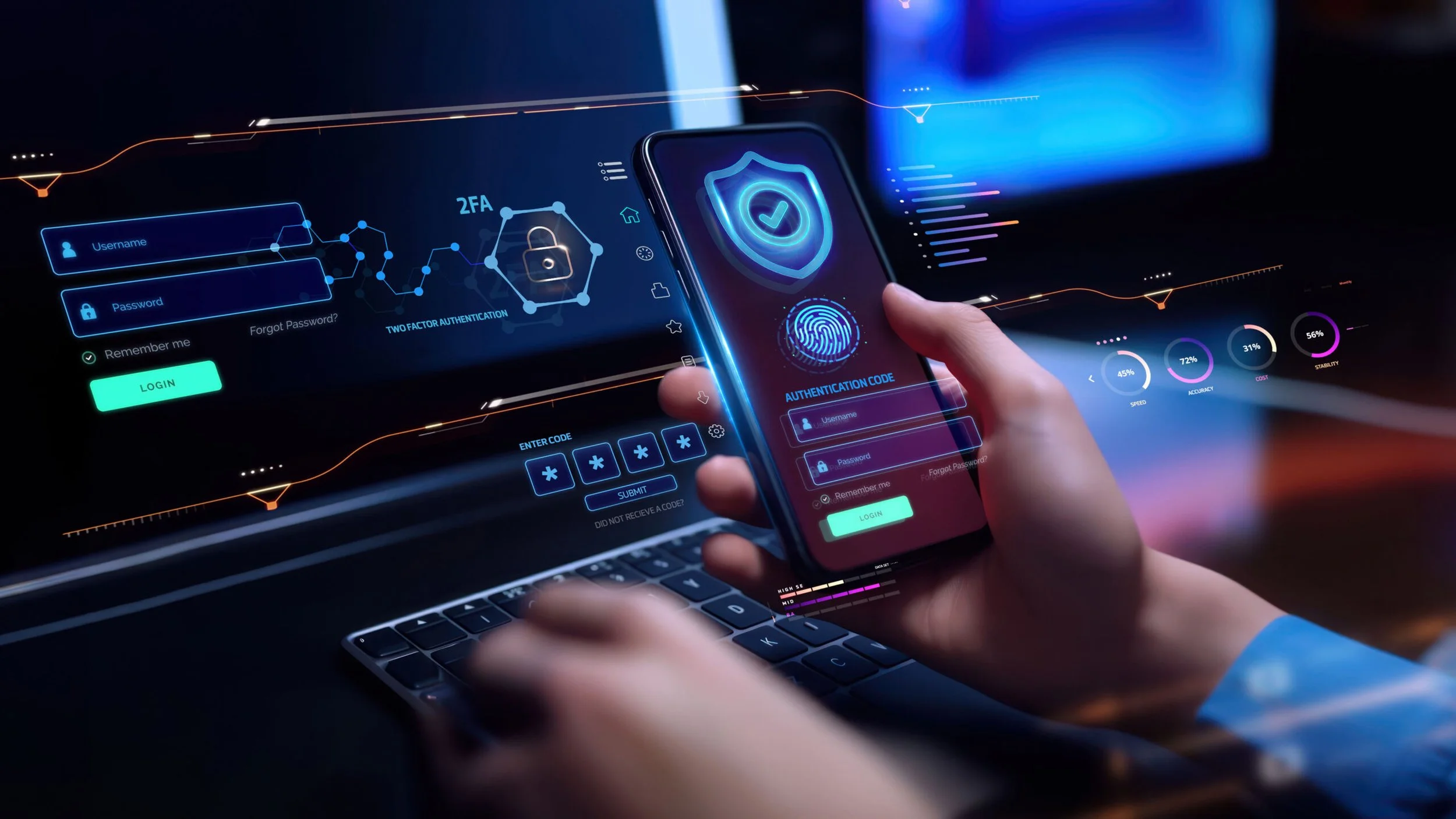
The device that holds your email, your authenticator app, your VPN client, your corporate documents, and your calendar is also the device most likely to be lost, stolen, connected to an untrusted network, and left outside your organization's security perimeter for the majority of every working day. That device is the smartphone — and for most businesses, it is both the most widely used corporate tool and the least consistently secured one.
Mobile devices have become the primary computing environment for a significant portion of the workforce. Sales teams manage client relationships from their phones. Executives approve transactions and access financial systems on mobile. Field staff submit reports, access operational systems, and communicate with headquarters entirely through smartphones and tablets. The security implications of this shift are substantial — and most organizations have not kept pace with the risk. A Managed Security Services Provider (MSSP) provides the mobile security infrastructure and oversight that ensures these devices extend your security program rather than undermine it.
Why Mobile Devices Are a Growing Attack Surface
Several characteristics of smartphones make them a particularly attractive target for attackers. They are always on, always connected, and carry a combination of personal and corporate data that provides attackers with both immediate value and a pathway into broader organizational systems. Unlike corporate laptops that are managed, monitored, and periodically patched by IT teams, mobile devices often operate in a governance gap — used for corporate purposes but without corporate security controls.
The bring-your-own-device (BYOD) model, which is common across industries and company sizes, compounds this problem. When employees use personal smartphones for work, the organization has limited visibility into what other applications are installed, what networks the device connects to, and whether the device's operating system is current. A personal device that is also a corporate device inherits both the individual user's security habits and the organization's risk.
CyberSecOp's Cybersecurity Assessment Services consistently identify mobile devices as one of the most significant unmanaged risk areas in organizational security programs — even in businesses that have invested heavily in perimeter and endpoint security for traditional workstations.
The Mobile Threat Landscape
Malicious Applications
App stores — even official platforms — have repeatedly been used to distribute malware. Applications that request excessive permissions, impersonate legitimate tools, or contain hidden malicious functionality have reached millions of devices before being identified and removed. Once installed, a malicious application may harvest credentials, monitor communications, access the device's camera and microphone, or serve as a persistent backdoor into the device's data.
The risk is magnified when employees install applications from outside official app stores — sideloading applications that have bypassed platform security review entirely. Corporate mobile security policies must address both the applications approved for installation and the controls that prevent unauthorized software from reaching corporate devices.
Phishing via SMS, Messaging Apps, and Email
Mobile phishing — sometimes called smishing when delivered via SMS — has grown substantially as attackers recognize that mobile users are more likely to act impulsively on links received through messaging channels than on those received via desktop email. Text messages carry an implicit sense of urgency and familiarity that email does not, and the smaller screen of a mobile device makes it harder to inspect URLs before tapping them.
Beyond SMS, phishing attacks now routinely arrive through WhatsApp, Teams, Slack, LinkedIn messaging, and other platforms that employees use on their phones. Many of these channels bypass email security filters entirely, delivering malicious links directly to a device that may have no filtering controls in place at all.
Unsecured Wi-Fi and Network Attacks
Smartphones automatically connect to previously used networks and are frequently connected to public Wi-Fi in hotels, airports, cafes, and conference centers. The risks associated with these connections — man-in-the-middle attacks, evil twin networks, and packet interception — apply equally to mobile devices as to laptops. A device that employees would never connect to public Wi-Fi without a VPN on their laptop is routinely connected without any protection on their phone. CyberSecOp addresses mobile network security as part of its broader network security program, ensuring that VPN enforcement extends to mobile devices and not just traditional endpoints.
OS and Application Vulnerabilities
Mobile operating systems and the applications running on them contain vulnerabilities — some of which are actively exploited before patches are available. Zero-day exploits targeting iOS and Android have been used in targeted attacks against high-value individuals, and known vulnerabilities in popular applications are routinely exploited against devices that have not applied available updates. The challenge for organizations is that mobile OS update cycles are controlled by device manufacturers and carriers, not by IT teams, and employees frequently delay or decline updates.
SIM Swapping
SIM swapping attacks involve an attacker convincing a mobile carrier to transfer a victim's phone number to a SIM card the attacker controls. Once successful, the attacker receives all calls and SMS messages intended for the victim — including the one-time passcodes used for SMS-based multi-factor authentication. SIM swapping has been used to bypass MFA on corporate accounts, cryptocurrency wallets, and financial platforms, with losses frequently in the hundreds of thousands of dollars per incident.
Physical Loss and Device Theft
The simplest mobile security risk is also among the most common: a device that is lost or stolen. A smartphone without full-disk encryption, a strong screen lock, and remote wipe capability is a portable repository of corporate data and authentication credentials that requires no technical expertise to exploit. In regulated industries, a lost unencrypted device carrying client or patient data may itself constitute a reportable breach event.
Stalkerware and Unauthorized Monitoring
Stalkerware — applications designed to covertly monitor device activity — can be installed on corporate devices by malicious actors who have temporary physical access to an unlocked phone. These applications operate invisibly in the background, transmitting location data, communications, and screen content to a remote party. In corporate contexts, this threat extends to competitive intelligence gathering and insider threat scenarios where a device is used to monitor an employee's communications with clients or legal counsel.
How an MSSP Secures the Mobile Environment
Mobile Device Management
Mobile Device Management (MDM) is the foundational layer of enterprise mobile security, giving organizations centralized control over every enrolled device in the fleet. Through CyberSecOp's managed security program, MDM deployment enforces encryption on all corporate data, requires screen lock authentication, manages application permissions, controls which networks devices can connect to, and enables remote wipe for lost or stolen devices — all from a centralized console that IT and security teams can monitor and act on without physical access to individual devices.
For BYOD environments, MDM can be configured to apply corporate security policies exclusively to a containerized work profile while leaving personal data and applications untouched — addressing the privacy concerns that frequently cause employee resistance to device management enrollment.
Mobile Threat Defense
Mobile Threat Defense (MTD) solutions extend endpoint detection and response capabilities to mobile devices, continuously analyzing device behavior, application activity, network connections, and operating system integrity for indicators of compromise. Where traditional antivirus approaches are inadequate for mobile environments, MTD identifies threats based on behavioral patterns — detecting malicious applications, network-based attacks, and OS-level compromises in real time. CyberSecOp's Security Operations Center monitors MTD alerts across the mobile fleet alongside traditional endpoint and network telemetry, ensuring that a compromise detected on a smartphone triggers the same response workflow as one detected on a server.
Application Vetting and Control
An MSSP establishes and enforces corporate application policies — defining which applications are approved for installation on corporate or managed devices, blocking access to known malicious or high-risk applications, and monitoring for applications that have been approved but subsequently identified as problematic. For organizations developing their own mobile applications, CyberSecOp's application security practice includes mobile-specific security testing that identifies vulnerabilities before they reach production.
Zero Trust Mobile Access
Zero Trust Network Access extends least-privilege principles to mobile devices — ensuring that a smartphone connecting to corporate resources must continuously verify its identity, health status, and authorization before access is granted. A device that fails a compliance check — because its OS is out of date, its screen lock has been disabled, or it is connecting from an unexpected location — is denied access or placed in a restricted network segment until the issue is resolved. This control is particularly valuable for organizations with BYOD environments, where device compliance cannot be assumed. CyberSecOp implements Zero Trust mobile access as part of its broader network security architecture practice.
Security Awareness Training for Mobile Threats
The technical controls that protect mobile devices are significantly more effective when employees understand the threats they face. CyberSecOp's Security Awareness Training programs include mobile-specific content — covering smishing recognition, safe app installation practices, public Wi-Fi hygiene, physical device security, and the proper steps to take when a device is lost, stolen, or behaving unexpectedly. Employees who understand why these controls exist are far more likely to comply with them and to report anomalies promptly.
Incident Response for Mobile Compromises
When a mobile device is compromised — whether through malware infection, credential theft, physical loss, or a SIM swap attack — the response must be fast and coordinated. CyberSecOp's Incident Response Services include mobile-specific response procedures: remote device isolation and wipe, credential revocation across connected accounts, forensic preservation of device data where legally required, and investigation of how the compromise occurred and what data may have been exposed.
Mobile Security Is Not a Feature — It Is a Program
The most common mobile security failure is not a missing tool — it is the absence of a coherent program. MDM deployed without enforcement policies is ineffective. MTD deployed without SOC integration generates alerts that go unreviewed. Application controls without employee education are worked around rather than complied with.
An MSSP brings the program structure that individual tools cannot provide on their own — integrating mobile security controls into a managed security ecosystem with continuous monitoring, clear policies, employee training, and tested incident response procedures.
A Cybersecurity Assessment from CyberSecOp will evaluate your current mobile security posture, identify gaps in device management, network protection, and application controls, and produce a prioritized roadmap for closing them. Contact us at cybersecop.com/contact to speak with a member of our team.