
The Future of MSSPs: What's Next for Managed Security in the Age of AI
The managed security services industry was built on a premise that remains as valid today as it was when the first MSSPs emerged in the late 1990s: most organizations cannot build and sustain enterprise-grade security capabilities on their own. The economics of security talent, the cost of purpose-built tooling, and the complexity of the threat landscape all favor a managed services model over an entirely in-house approach. What has changed, and continues to change rapidly, is what that managed services model looks like.
The MSSP of 2026 looks substantially different from the MSSP of 2016. The perimeter-based security model that once defined the category has given way to identity-centric, cloud-native architectures. Threat detection has shifted from signature-based rules to behavioral analytics and machine learning. The talent shortage that made managed security attractive has become more acute, not less. And artificial intelligence, as both a tool for defenders and a capability for attackers, is reshaping every dimension of the security landscape. For businesses evaluating their security partnerships and strategies, understanding where the MSSP industry is heading is as important as understanding where it has been. CyberSecOp's managed security services are built on this forward-looking foundation, continuously evolving to meet the threats and requirements of tomorrow's environment, not just today's.
AI as Both Threat and Tool
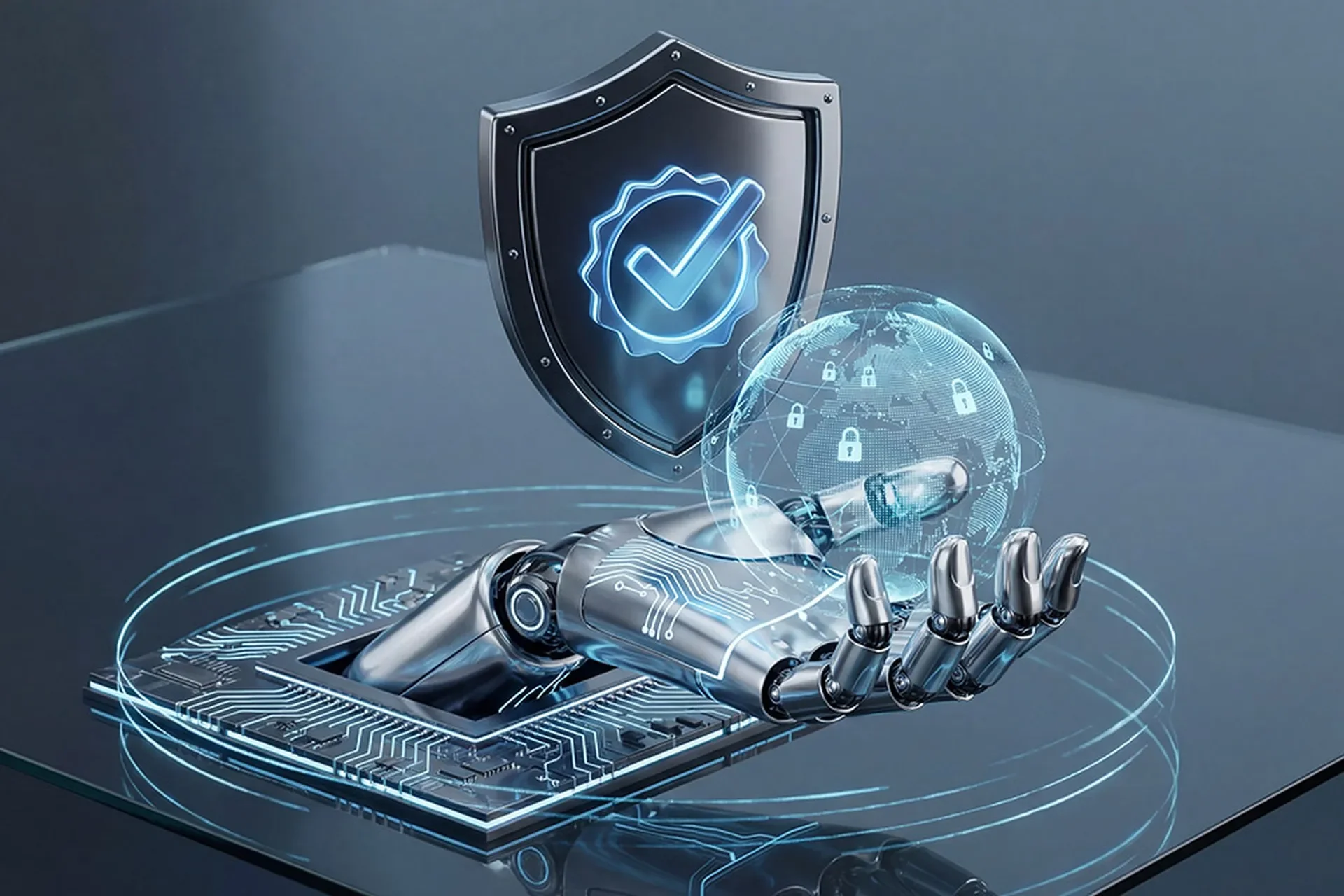
No single development has had more impact on the near-term future of managed security than the rapid maturation of artificial intelligence capabilities. AI is simultaneously expanding the capabilities of defenders and lowering the barrier to entry for attackers, and MSSPs are at the center of both dynamics.
On the defensive side, AI-powered threat detection platforms are enabling security operations centers to process dramatically larger volumes of security telemetry, surface genuine threats from a sea of alerts, and identify attack patterns that rule-based systems would miss entirely. Machine learning models trained on vast datasets of malicious behavior can detect novel malware variants, identify compromised credentials through behavioral anomalies, and flag insider threats through subtle deviations from normal activity patterns. The result is a security operations capability that is more accurate, faster, and more scalable than any purely human-driven approach.
On the offensive side, the same AI capabilities are enabling attackers to generate more convincing phishing content, automate vulnerability discovery, produce malware that evades signature-based detection, and conduct social engineering at a scale that was previously impossible. CyberSecOp's Security Operations Center has integrated AI-enhanced detection capabilities across its monitoring operations, ensuring that the defensive application of AI keeps pace with its offensive use.
The Shift to Proactive Security
From Reactive Detection to Continuous Exposure Management
The traditional MSSP model was fundamentally reactive: monitor for threats, detect when something goes wrong, and respond. The future of managed security is moving toward a more proactive posture, continuous exposure management that systematically identifies and reduces attack surface before attackers can exploit it.
Continuous Threat Exposure Management (CTEM) is an emerging framework that replaces periodic assessment with ongoing, programmatic evaluation of an organization's attack surface, vulnerability exposure, and control effectiveness. Rather than an annual penetration test and a quarterly vulnerability scan, CTEM provides a continuously updated picture of security posture that enables prioritized, risk-driven remediation. CyberSecOp's Attack Surface Management and Vulnerability Management Service are building blocks of this approach, providing the continuous external and internal visibility that CTEM requires.
Threat Intelligence as a Managed Service
Threat intelligence, actionable information about adversary tactics, techniques, and infrastructure, has historically been available to large enterprises with dedicated intelligence teams and the budget to access premium feeds. The future of the MSSP model includes industrialized threat intelligence that is contextualized, operationalized, and delivered as part of the managed service, providing every client organization with the same quality of adversary knowledge that was previously reserved for the largest security organizations.
This means not just knowing that a particular threat actor is active, but understanding which of that actor's techniques are relevant to a specific client's environment, which assets they are most likely to target, and what defensive actions would be most effective against their known playbook. CyberSecOp's Dark Web Monitoring service is one component of this intelligence layer, providing visibility into threat actor activity specifically relevant to client organizations.
Zero Trust Becomes the Operational Standard
Zero Trust, the security model that rejects implicit trust based on network location and requires continuous verification of every user, device, and application seeking access to resources, has moved from a conceptual framework to an implementation standard. The future of managed security is built on Zero Trust architecture as a baseline rather than an advanced option.
For MSSPs, this means helping client organizations implement and operate the identity, device management, and network segmentation controls that Zero Trust requires, and continuously monitoring the policy enforcement mechanisms that make Zero Trust effective in practice. CyberSecOp's network security practice designs Zero Trust architectures appropriate for each client's environment and manages the ongoing enforcement and monitoring that keeps the model effective as the environment evolves.
The Expanding Scope of Managed Security
Cloud Security Posture Management
As organizations migrate workloads to cloud environments and adopt multi-cloud architectures, the security posture of cloud infrastructure has become a primary concern. Misconfigured cloud storage buckets, overly permissive identity policies, and unmonitored cloud-native services have been responsible for some of the largest data exposures of recent years. Cloud Security Posture Management, the continuous assessment and remediation of cloud configuration against security best practices, is becoming a standard component of managed security services, not an optional add-on.
OT and IoT Security
The convergence of information technology and operational technology, accelerated by industrial IoT deployments, smart city infrastructure, healthcare device connectivity, and manufacturing automation, is expanding the scope of what managed security must cover. MSSPs that can provide security operations across both IT and OT environments, using protocols and monitoring approaches appropriate for industrial control systems alongside those used for conventional IT infrastructure, will be substantially better positioned to serve the needs of asset-heavy industries than those limited to traditional IT security.
Application Security Integration
As organizations develop software more rapidly and deploy it more frequently, the integration of security into the development pipeline, DevSecOps, is becoming a managed service rather than an internal capability. MSSPs that can provide application security testing, secure code review, and software composition analysis as part of a continuous deployment pipeline extend their value into the development lifecycle, not just the operational environment. CyberSecOp's penetration testing services already encompass application security testing, a capability that is increasingly being delivered as a continuous, integrated service rather than a periodic engagement.
Managed Detection and Response Evolution
Managed Detection and Response has matured significantly as a service category, moving from alert forwarding and basic triage to genuinely active threat hunting, automated response playbook execution, and deep forensic investigation capability. The future of MDR includes increasingly automated response to well-understood threat patterns, freeing human analysts to focus on novel, complex, and high-judgment investigations. CyberSecOp's managed detection and response capabilities are built on this automation-augmented analyst model.
The Talent Challenge and the AI Response
The cybersecurity talent shortage is structural, not cyclical. The gap between the number of security professionals needed and the number available has persisted for years and shows no sign of closing through conventional workforce development alone. AI is the most significant near-term response to this challenge, not by replacing security analysts, but by dramatically amplifying what each analyst can do.
AI-assisted security operations enable analysts to investigate more alerts with greater depth, to identify patterns across larger datasets than any human team could process manually, and to automate the routine triage and documentation that consumes a disproportionate share of analyst time. The result is a security operations center that delivers more with the same or fewer human resources, directly addressing the economics that make managed security valuable in the first place.
For client organizations, this means that the quality of managed security services will increasingly be differentiated not just by the number of analysts an MSSP employs, but by the sophistication of the AI platforms those analysts work with and the quality of the data those platforms are trained on. CyberSecOp's investment in AI-augmented security operations reflects this reality, ensuring that the analysts working on client environments have the most effective tools available.
What Businesses Should Do to Prepare
The evolution of the managed security landscape has direct implications for how businesses should evaluate and structure their security partnerships. Several priorities are worth focusing on as the industry develops.
Businesses should assess whether their current managed security partner has genuine AI-augmented detection capabilities or is still operating a primarily rules-based SOC. The difference in detection effectiveness against modern threats is substantial and growing.
Organizations should evaluate their readiness for Zero Trust implementation, not as a future project but as an active transition with a defined roadmap. The architectural changes required are significant, and the organizations that begin earlier will be better positioned as Zero Trust requirements become more explicit in regulatory frameworks and procurement requirements.
Compliance obligations will continue to expand in scope and specificity. Businesses that have not built a structured compliance program, one that maps their security controls to applicable regulatory requirements and maintains that mapping as regulations evolve, will face increasing exposure as enforcement intensifies.
Finally, organizations should ensure that their security partnership includes strategic oversight, not just operational execution. The technical landscape is changing too rapidly for a security program that lacks executive-level direction and regular strategic review to remain effective. CyberSecOp's Virtual CISO Program provides this strategic layer, ensuring that security strategy keeps pace with both the threat landscape and the business's own evolution.
The MSSP of Tomorrow Is Being Built Today
The managed security services industry is in a period of substantial transformation. The organizations that will lead the next decade of the industry are those investing now in AI-augmented operations, proactive exposure management, expanded OT and cloud security capabilities, and the compliance program management that the regulatory environment increasingly demands.
CyberSecOp is building that future, integrating emerging capabilities into a managed security platform that provides clients with protection that evolves alongside the threats they face. Whether you are evaluating your current security partnership, planning a Zero Trust transition, or building a compliance program for the current regulatory environment, we are ready to help. Contact us at cybersecop.com/contact or begin with a Cybersecurity Assessment to understand where your program stands today and where it needs to go.